
Structured Cabling Installation on Long Island
Cat6/6A and fiber runs, patch panels, and labeled rack builds, installed to support the next decade of devices — not just the ones you own today.
Every system you install later depends on the cabling you install first.
Cameras, access points, and phones all eventually need a wired connection. Cabling that's run without a plan means opening walls again in a few years. We plan the full pathway — from the wall jack back to a labeled, organized rack — before pulling a single cable.
Cat6 & Cat6A Runs
Copper cabling rated for gigabit and multi-gigabit speeds, run to support what your network needs now and what it's likely to need in five to ten years.
Fiber Runs for Long Distances
Fiber between buildings, floors, or detached structures where copper distance limits or interference make it the better choice.
Patch Panels & Labeled Racks
Every run terminated, tested, and labeled at a patch panel — so the next person who opens the rack (including us, years later) knows exactly what goes where.
PoE Runs for Cameras & Access Points
Power-and-data cabling for security cameras, Wi-Fi access points, and door hardware — one cable instead of a separate electrician trip.
Certification & Testing
Every run tested for continuity and performance after install, so you know it works before it's buried behind drywall.
Retrofitting Finished Spaces
Cabling pulled through existing walls and ceilings with minimal patching, for buildings that weren't pre-wired during construction.
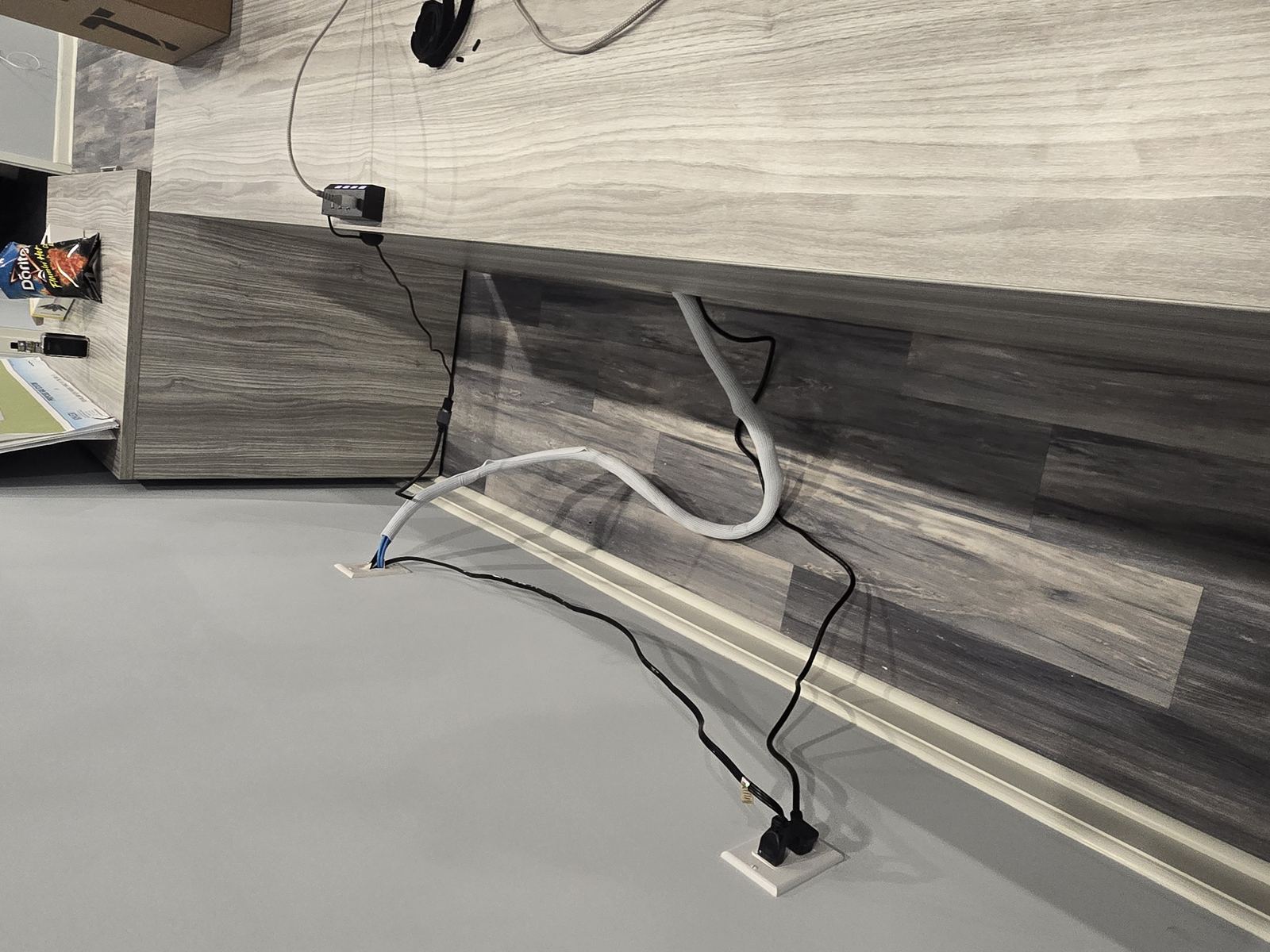
Real cabling and rack builds on Long Island properties.
Before you reach out.
Cat6 handles gigabit speeds over standard distances and is enough for most homes and offices. Cat6A supports multi-gigabit speeds over longer runs and is worth the extra cost for data closets, server rooms, or buildings likely to need higher bandwidth later.
Usually, yes, using existing pathways like attics, basements, and wall cavities, with minimal patching where a cable has to cross a finished surface. We'll walk the route with you before starting.
Yes — every run is tested for continuity and performance, and labeled at the patch panel, so there's a clear record of what each cable does.
Yes — PoE cabling can carry both power and data to cameras, access points, and door hardware, which is typically planned alongside your security camera and network installation.
Building or renovating? Plan the cabling first.
The earlier we're involved, the less it costs to run cabling — before drywall goes up, not after.